
With the opening of the land market in July 2021, Ukrainians got the opportunity to invest money in a new liquid asset.
According to experts, investing in Ukrainian agricultural land is a worthy alternative to traditional investments in real estate, deposits or securities. Thus, after purchasing an agricultural plot, the investor will receive a ready-made business that will provide not only stable income in the form of rent, but also a significant increase in the value of the asset due to its capitalization. One of the factors of asset capitalization is the value of agricultural land in neighboring states.
The economic situation, terms of acquisition and cost of agricultural lands in other states are analyzed in the Strategy for improving the management mechanism in the sphere of use and protection of state-owned agricultural lands and their disposal, approved by a resolution of the Cabinet of Ministers back in 2017.
Thus, in accordance with the aforementioned Strategy, land reform in Bulgaria began in the early 90s of the 20th century, during which land ownership was granted to all who could prove that they owned it before 1946.
All the land was returned to the former landowners. Thus, today 98 percent of farm land is concentrated in private ownership.
A three-year moratorium on sales was introduced for new owners. Today, there is only a partial restriction on the participation of foreign capital in agricultural land ownership.
Land can be purchased by a Bulgarian citizen, a legal entity or an individual who has been in the country for more than five years, a company from a country with which Bulgaria has concluded an international agreement, as well as from a country that is a member of the European Union.
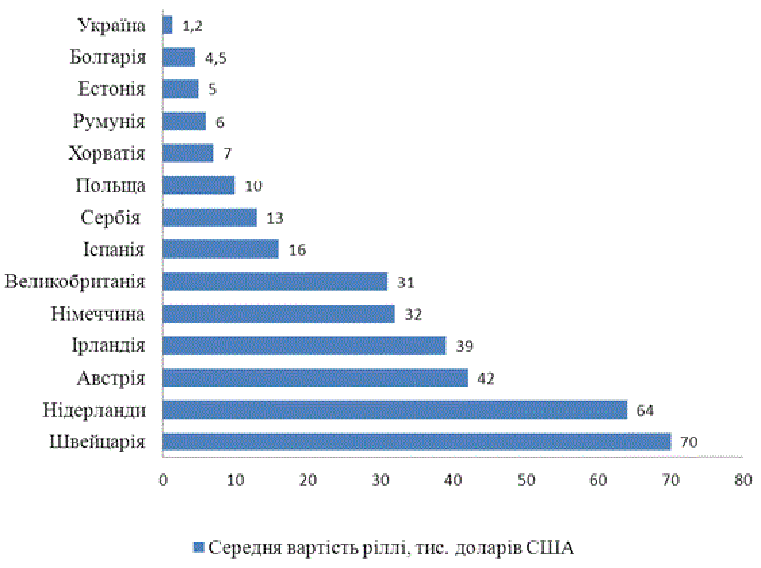
Land prices are not regulated, there are no restrictions on the area that can be sold to one person. The average cost of agricultural land is 4.5 thousand dollars per hectare.
In Estonia, the reform began in the early 90s of the 20th century. The most difficult task was to find a balance between restitution - the return of land to former owners and the distribution of state land among the peasants who worked on it during the USSR. This process greatly complicated the reform, which dragged on for years.
Foreigners were almost immediately allowed to participate in the purchase of land on the condition that it be used only as a farm, and the right to change the target status of the land after five years of its direct use was legalized.
About 60 percent of the land fund is leased from producers of agricultural products.
The state does not regulate land prices. The average cost of land is $5,000 per hectare.
In Poland, the reform began at the same time as in Bulgaria and Estonia. Collectivization in the country after its accession to the socialist camp was mostly a failure. About 75 percent of arable land continued to be privately owned even under communist rule.
The state does not regulate land prices. The maximum plot area owned by an individual is 500 hectares. Land sales tax ranges from 2 to 5 percent and is charged to the buyer.
Partial restrictions on the participation of foreign capital in the purchase of agricultural land exist, but as of May 1, 2016, they were abolished for EU citizens. The average cost of land is $10,000 per hectare.
In Romania, there was a process of transferring land from state ownership to private ownership through distribution and partial restitution. Restrictions on the purchase of agricultural assets are insignificant: the buyer must have professional experience or qualifications in the management of the agricultural sector, the maximum area for individuals is 100 hectares.
In Romania, 94 percent of the land fund is privately owned. After the country joined the EU in 2007, a seven-year moratorium was introduced on the sale of land to non-residents. In 2014, its term expired and the market became open to foreign capital.
The state does not regulate land prices. Land sales tax is 2-3 percent of the transaction value. EU citizens have access to the purchase of agricultural land, provided that it is used for its intended purpose. The average cost of land is $6,000 per hectare.
In Croatia, the restitution process began after the breakup of the former Yugoslavia under the Dayton Peace Accords of 1996. It finally ended only in 2010, when foreign citizens who could prove their inheritance acquired the right to return land ownership.
Land prices in Croatia are not regulated, and there are no restrictions on the area that can be sold. The tax on the sale of land and land ownership is 5 percent. Foreigners do not have access to purchase agricultural land. Its average cost is $7,000 per hectare.
In Serbia, land reform began with the adoption of a restitution law, according to which 74 percent of agricultural land was returned to private owners who had been deprived of their land tenure rights in 1953.
The restitution process for vineyards took place in a different order. Tenants of state lands received the right to extend the lease for 30 years. Also, in the period 2002-2008, nine large state agricultural companies and 125 state farms were privatized on a competitive basis.
Today, 92 percent of agricultural land is privately owned. The state does not regulate land prices, there is a limit on the minimum land plot - 0.5 hectares. Foreigners do not have the right to purchase land. Its average cost is $13,000 per hectare.
In all the mentioned countries, either a completely open land market or a market with partial restrictions was gradually created. The transformation of the socialist system into a capitalist system led to a decrease in the share of agricultural production in the structure of the gross domestic product, but caused an increase in the profitability and productivity of the agricultural sector.
The choice of the agricultural land market development model in these countries gave impetus to rapid social and economic development.
The situation is different with the development of the market in some of the most developed states - EU members.
Austria does not belong to the agricultural countries of the EU. Only 1.4 percent of the national gross domestic product is accounted for by the agro-industrial complex. 53 percent of agricultural land is privately owned.
Each federal state has a separate law regulating land ownership, and the procedure for purchase and sale agreements is determined by local executive bodies. In some provinces, there are restrictions on the price and the minimum size of the allotment.
A partial restriction on the purchase of agricultural land also applies to mountainous areas - only registered farmers have the right to purchase. The minimum lease term is three years. A ban has been established on the fragmentation of agricultural land - only one child can inherit land ownership. Some provinces have exceptions.
Tax on the conclusion of an agreement on the purchase of land is 3.5 percent of the value of the agreement, it is paid by the buyer. The amount for registration services on the cadastral map (1.1 percent of the transaction value) is also charged to the buyer. The tax on income from the sale of the allotment is 20 percent of the transaction value. Almost 2 percent of landowners own 18.4 percent of agricultural land.
In Austria, the maximum balanced market model has been created, ensuring high production efficiency and compatibility with the principles of environmental protection and rational use of soils. The average cost of agricultural land is 42,000 dollars per hectare.
Great Britain is not an agrarian country. The share of the agro-industrial complex in the national gross domestic product is only 0.7 percent, 90 percent of agricultural land is privately owned.
The market is maximally liberalized - there are no ownership restrictions for foreign companies or individuals. There is no limit on the size of privately owned land, except in Scotland, where the minimum plot must be 0.3 hectares.
In some administrative and territorial units, there is a progressive scale of taxation from the zero rate depending on the value of the transaction. Land lease terms are not regulated, except in Scotland - no more than 175 years.
Great Britain belongs to the countries with the highest level of agricultural mechanization and production productivity. Although farming is not popular among young people (the average age of a British farmer is 59), agriculture is considered one of the most attractive investment assets. The average cost of agricultural land is $31,000 per hectare.
Ireland has one of the most liberalized land markets in the EU. The process of land redistribution took place under the control of the state and taking into account subsidies, traditionally long-term loans were issued to peasants for 66 years.
Debt obligations are passed on to the next generation, with the result that about 91 percent of agricultural land is privately owned, and about 20 percent is leased.
A feature of the Irish market are short-term, seasonal rental agreements, which are traditionally concluded informally and do not require registration, unlike long-term rentals.
There are no restrictions on buying land in Ireland for foreigners. Only for legal entities - non-residents of the EU, permission from the land commission is required. There are no restrictions on the minimum or maximum area that can be owned by one person. The registration fee can range from 1 percent to 8 percent of the transaction value, but zero tax applies to young farmers.
The land lease fee is only 1 percent of the deal value. In the event that farmers implement environmental programs or infrastructure development, a flexible system of tax benefits is applied. The average price of agricultural land is 39,000 dollars per hectare.
In Spain, as a result of the land reform, the "priority" category was introduced, which gave innovative agricultural companies the right to long-term land leases, annual assistance from the state for eight years, and other benefits. The government also set a bar for mandatory insurance.
The land tax exceeds 0.3 percent of the land value. Property transfer tax is 6-7 percent of the transaction value.
There are no restrictions on buying and selling land for foreigners. There is no regulation of the price corridor, no minimum or maximum land plot volumes for agribusiness are defined. In Spain, the level of added value in the agro-industrial complex per worker is one of the highest in the EU. The average cost of agricultural land is $16,000 per hectare.
Germany is a country with a traditionally high level of mechanization and introduction of environmentally friendly technologies in agricultural production. However, in the 90s of the 20th century, a politically determined crisis arose in the country's agro-industrial complex, the cause of which was the incorporation of the collective farms of the former GDR into the liberalized and highly developed market of the Federal Republic of Germany. The process of land privatization had three stages.
At the first stage, the land was not sold, but only leased for 12 years; on the second - state land was sold at a discounted price primarily to those who lost their allotments in 1945 or were already involved in agricultural production; on the third - lands that continued to be in the state fund, were sold on market terms through auctions.
Former landowners can purchase agricultural land at a discounted price, but on the condition that they are used as intended for the next 20 years. The tax is no more than 3.5 percent of the transaction value and is charged to the buyer.
In Germany, medium-sized farms and large corporate farms predominate. The market of the eastern federal states is almost four times as lively as that of the western states. The average size of land that is bought and sold is higher in the eastern regions than in the western regions. The average price of agricultural land is 32,000 dollars per hectare.
In the Netherlands, technologies are widely used that contribute to highly efficient production, the productivity of which is on average five times higher than the European average.
The high liquidity of the agro-industrial complex in the Netherlands motivates financial corporations to buy agricultural assets from owners and lease them to such owners. At the same time, the previous owner can buy back his plot at the end of the lease term, having additional working capital without attracting credit resources.
In the Netherlands, 89 percent of agricultural land is privately owned. There are no regulatory restrictions on price, area or country of origin of capital for agribusiness investments in the Netherlands. Land acquisition tax is 6 percent of the transaction value.
The buyer can be exempted from paying the tax if he undertakes not to change the purpose of his asset for ten years. The minimum lease term for a plot of land is six years, for a farm - 12 years. The tenant has a priority right to purchase his plot in the event of its being put up for auction.
This is one of the most successful examples of liberalization and deregulation in global practice. The average cost of agricultural land in the Netherlands is $64,000 per hectare.
Switzerland is an example of an open and high-tech market for agricultural assets on a global scale. Although agriculture employs only 3.2 percent of the population, more than 50 percent of the food consumed by the population is produced in Switzerland.
100 percent of the land in the state is privately owned. There is no government regulation or influence on the market balance, restrictions on the right to buy and sell land under conditions of citizenship of the EU, one of the countries of the European Free Trade Association or having a residence permit in Switzerland.
The only condition for the purchase of agricultural land is that the buyer must manage the farm independently, having the appropriate experience or qualifications. The maximum plot area is regulated by local authorities in each canton (self-governing province). The value of the deal should not exceed the average value of similar plots over the past five years by 15 percent. The tax on land ownership is minimal - no more than 0.3 percent of the market value of the land.
The lease term must be at least nine years. Changing the purpose of the land after the sale is prohibited. Land use is strictly regulated by legislation on environmental standards and animal protection.
Priority is given to family forms of production. In case of sale, the owner of the land must obtain notarial permission from the relatives who have the priority right to inherit or purchase this land.
The average cost of land in Switzerland is $70,000 per hectare.
So, after the opening of the agricultural land market in Ukraine, taking into account the world experience, as well as the fact that in developed countries both lease relations and the agricultural land market are developing evenly, Ukraine has great potential and all the grounds for a significant increase in the value of agricultural land appointment.