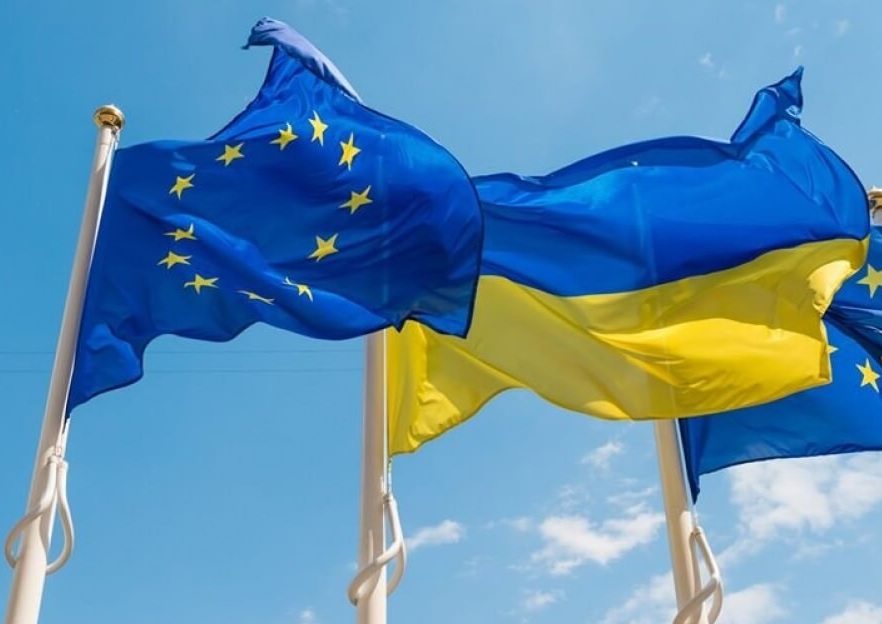

Ukraine is one step away from the start of negotiations on joining the European Union.
We are entering the process of transformation in all spheres of the economy, legislation, markets and relations. After all, it is impossible to expect to be part of a large community of countries and continue to live according to its own rules, bypassing the established norms of the EU.
Land legislation and concepts of the land market should be harmonized with generally accepted European norms. In particular, changes in the agricultural sector are of crucial importance for the economic recovery and further sustainable development of Ukraine.
Each EU member state sets its own filters, rules and restrictions for specific situations of land relations. At the same time, the Court of Justice of the European Union acts as a guarantor for all EU countries to respect their borders and prevent overly strict regulations.
Let's try to analyze what land market models exist in different EU countries. What is the current state of the land market in Ukraine? But what opportunities does the completion of the land reform offer to the country, farmers and landowners?
Purchase and Lease Restrictions
As part of the USAID Agriculture Program project on providing analytical support for the adaptation of Ukrainian legislation in the agricultural sector to the European legislation of Civitta and EasyBusiness, the legal framework of 12 EU countries in the agricultural sector, experience, land relations was analyzed.
The countries of Western Europe (the Netherlands, Belgium, Ireland, Spain, France) and the countries of Central and Eastern Europe (Lithuania, Poland, Romania, Slovakia, Hungary, Croatia, the Czech Republic) were selected for analysis. The selection of these countries was based on the principle of relevance of their experience for Ukraine.
In all these countries there is an open market for agricultural land (without a ban/moratorium on the transfer of such land), but the degree of regulatory liberalization varies considerably, especially when comparing Western and Eastern European countries.
In addition, among the countries of Central and Eastern Europe, the Czech Republic and Slovakia opened their land markets. France, on the other hand, has one of the most regulated land markets in the EU. But in most cases strict regulation of land markets can be found in the new EU member states.
Hungary has the most restrictions
In several analyzed countries, special requirements are imposed on buyers of agricultural land.
In Hungary, for example, only registered farmers can buy agricultural land with an area of more than 1 hectare. Farmers are citizens of Hungary and EU countries who are qualified in agriculture or forestry, or have been engaged in agricultural and forestry activities in Hungary for at least three out of five consecutive years, or have at least 25% of registered agricultural enterprises.
In Poland, there are also significant restrictions: preference is given to farmers who work on their land, and only those who have the status of a farmer can buy land of more than 1 ha. These persons are obliged to engage in agricultural activities for at least five years, and the land acquired during this period cannot be sold or transferred to other persons.
Private farmers, especially legal entities, can buy agricultural land only with the approval of the National Agricultural Support Center.
In France, there are no legal restrictions on the purchase of land, but for conducting agricultural activities (and winemaking) a special license is required, one of the conditions for obtaining it is a special education and work experience in the field of agricultural activities.
As for the restrictions on corporate ownership of agricultural land, they are not typical.
Only in Hungary, the purchase of land by legal entities created under the laws of Hungary and other countries is completely prohibited.
In Poland, legal entities must obtain the consent of the State Agricultural Support Center if they acquire more than 1 hectare of land.
Protection of the rights of tenants or land owners
In most Western European countries, such as the Netherlands, Belgium, France, Spain and Slovakia, the rights of tenants are protected to the maximum extent possible. Tenant protection mechanisms include establishing minimum lease terms for agricultural land (in various countries from 5 to 27 years).
France and the Netherlands also have maximum contractual rental rates set annually by their respective governments. In Belgium, the maximum prices in each region are reviewed every three years with the participation of representatives of landowners and farmers' organizations.
To protect the rights of tenants, additional guarantees may be introduced: maximum lease term and minimum rent.
Such an instrument operates in Spain, two regions of Belgium (in Brussels and Flanders), as well as in the Netherlands.
The preferential right of the lessee to purchase the leased land in case of its sale is provided in Spain, Hungary, Romania and Belgium (Brussels and Flanders), the Netherlands. In France and Poland, such a right is available with conditions - if the lease has been valid for at least three years. In France, a tenant who intends to buy land must cultivate it for the next nine years. In the Czech Republic, this right applies only in case of lease of state lands.
At the same time, in Ireland and all countries of Central and Eastern Europe, except for Slovakia, owners are more protected.
Land consolidation
In most of the considered European states, voluntary land consolidation is provided for by the initiative of the owners, the government or municipalities, and the participants in the consolidation procedure must receive lands equivalent in value to those they had, or compensation for losses.
In France, a special AFAFE land management system has been implemented to replace the consolidation procedure. The system is implemented and financed by municipalities that develop consolidation projects and can initiate forced expropriation of land, and owners can challenge such decisions in court.
In Croatia, consolidation is carried out on the basis of the Agricultural Land Consolidation Program, which is developed by the Ministry of Agriculture and approved by the government. After the consolidation of lands, it is prohibited to divide the lands of the consolidated area within 99 years from the date of adoption of the decision to unify the lands.
In Lithuania, the area of the consolidation project must be at least 100 hectares, have an approved master plan of the territory and at least five participants. In Spain, there are special procedures for remedial consolidation. For it to be carried out, the government must recognize by its decree that consolidation is in the national interest.
At the same time, there are countries where the consolidation procedure is not provided at all - these are Romania and Hungary.
Sale of land to citizens (legal entities) from other countries
In EU countries, due to the principle of free movement of capital and the principle of non-discrimination, there are generally no restrictions on the possibility for citizens or legal entities from other EU countries to acquire land.
At the same time, the situation is different for residents of countries outside the EU.
The strictest national regime is in Hungary: only citizens of EU member states can buy agricultural land.
In Lithuania, in addition to residents of the EU countries, persons registered in the member countries of NATO and the European Free Trade Association can also buy. And in Ireland and Poland, the acquisition of land by persons who are residents of countries outside the EU requires the permission of the authorities.
A more liberal regime in Croatia - certain types of agricultural land are available for purchase by foreigners from July 1, 2023. At the same time, the ban on the purchase of forests and pastures remains.
In contrast, there are generally no restrictions on residency and citizenship in Slovakia. But there is a principle of reciprocity for residents of non-EU countries: agricultural land cannot be purchased by foreign citizens or companies whose countries of origin do not allow Slovak citizens or companies to purchase such land (for example, currently Ukraine is such a country).
In Spain, a separate permit is required to purchase agricultural land in some regions, such as the islands, the Spanish territories in North Africa and the Strait of Gibraltar.
Court of the European Union
EU member states are authorized to regulate land circulation relations independently at the level of national legislation. At the same time, all cogwheel regulations in the EU revolve around the principles of free movement of goods, services, capital, and workers.
The circulation of agricultural land is subject to the principle of free movement of capital. Participants of the land circulation market cannot be subject to any restrictions on the movement of capital between the member states of the European Union.
The Court of Justice of the European Union (CJEU) supervises the observance of this principle during the implementation of internal national rules for the regulation of land circulation by EU member states.
During many years of activity, the Court of Justice of the European Union formulated many established positions regarding the regulation of land relations:
Price fixing. The CJEU confirms the possibility of state regulation of agricultural land prices if: such measures are based on objective, non-discriminatory, precise criteria; and price setting is aimed at avoiding excessive land speculation. It is also noted that such measures are a last resort when alternative, milder tools are not available.
Fighting aggressive expansion. When selling an agricultural plot of land, the state should distinguish between the categories "market value" of the plot and "highest tender rate". The state may not approve the sale of a plot at the highest price in a public tender if the bid is disproportionate to the value of the plot.
Requirement for independent implementation of farming activities. It is considered inadmissible, because it contradicts the principle of free movement of capital. The state cannot, at the national level, set a requirement for the subject, who intends to purchase agricultural land, to independently carry out farming activities.
At the same time, the demand for "preservation of land in agricultural use" is legitimate.
Requirement for the buyer to live near the plot. Such a requirement is also considered as a disproportionate restriction of the free movement of capital, and is therefore unacceptable.
Setting limits on the area of land acquisition. The practice of the CJEU has not established guidelines for setting limits on the area of acquisition of ownership rights on agricultural land. Fixing upper limits on the size of land that can be acquired or held is a limitation of the principle of free movement of capital.
Administrative permission for alienation of land due to military risks. The establishment of an administrative permit for the alienation of land plots located in the territories adjacent to the land borders for the purpose of protecting the military interest of the state is possible if there is a proper and real justification of the existence of a serious military risk, non-discrimination of the participants of such legal relations and the impossibility of establishing an alternative, softer restriction.
In fact, the decision of the Court of the EU is a filter of the limits of permissible regulations and limitations of turning points that EU states can implement at the level of national legislation in the field of land law regulation.
Conclusions for Ukraine
From January 1, 2024, as part of the so-called second stage of the land reform, legal entities founded by citizens of Ukraine received the right to purchase agricultural land. The area that can be in the same hands (of a legal entity or an individual) has been increased from 100 to 10,000 hectares. For legal entities that want to receive passive income from rent, a market opens up with a yield better than deposits.
Now the market is in its initial stages, only 1% of all agricultural land in Ukraine has been sold in three years.
According to public registers, before Russia's full-scale attack on Ukraine in February 2022, an average of 10,000 hectares were sold in the country per week. As of December 2023, sales have fallen fourfold to 2.5 thousand hectares per week.
Experts predict that the market will become more active during the year, and land prices will rise.
For the state, a functioning land market is income to the budget both from sales contracts, and from personal income tax and military levy, from further lease. Demand and supply are constantly growing, and accordingly, the value of land is increasing.
Already now it is necessary to do "homework" and take into account the EU norms, the positions of the CJEU in order for Ukrainian business to be competitive on the European market, Ukraine to be attractive to investors and to avoid lawsuits against Ukraine at the EU Court in the future.
Before the final acquisition of membership in the European Union, Ukraine is obliged to harmonize land legislation and bring it into line with generally accepted EU norms. The completion of the land reform is a legal procedure that automatically catalyzes economic processes, new opportunities for the country, farmers, as well as a new level of protection of the rights of landowners and land users.
That is why, after the victory, the third stage of land reform in Ukraine should take place, when foreign investors will receive permission to purchase agricultural land.
However, this issue is to be decided by the Ukrainian people in a nationwide referendum.